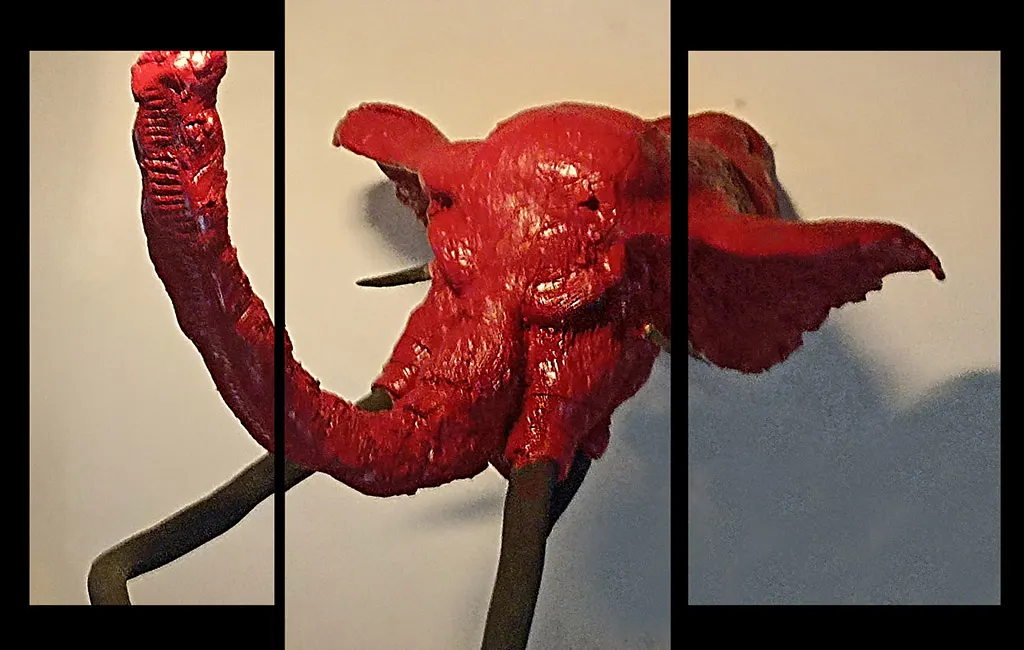
Red MûMaKIL
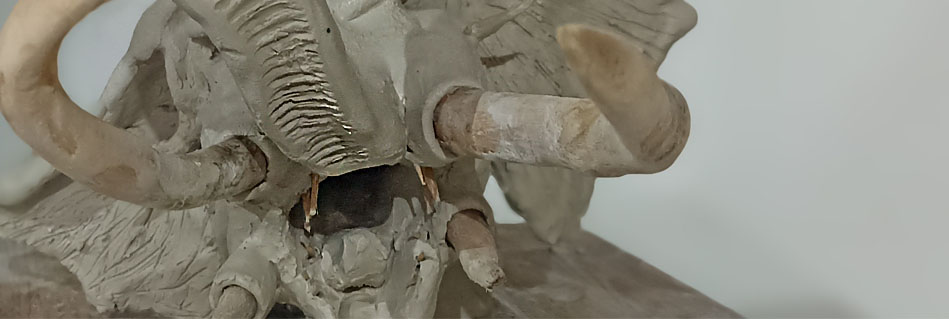
Oliphaunts of the East -Oliphaunts Inspired Fantasy Elephant Sculpture
Inspired by the epic visual power of The Lord of the Rings, Oliphaunts of the East is a wall sculpture that reinterprets the legendary war pachyderms of fantasy mythology through a personal and stylized artistic vision. Rather than functioning as a simple reproduction, the work transforms the iconic imagery of these colossal creatures into a sculptural composition suspended somewhere between myth, dream, and contemporary design.
The sculpture evokes the overwhelming presence traditionally associated with the Oliphaunts: gigantic beasts emerging from distant lands, symbols of unstoppable force, ancient warfare, and primal majesty. Yet here, their monumental identity is filtered through a more surreal and artistic interpretation where proportions, textures, colors, and materials merge into something more symbolic than realistic.
The result is a work that feels both familiar and alien — a fragment of fantasy transformed into a physical object capable of inhabiting real architectural space.
One of the defining characteristics of Oliphaunts of the East is its unusual construction process. Alongside clay, which gives mass, depth, and sculptural definition to the creature’s anatomy, materials such as wood, iron, tape, and cardboard were incorporated into the creation of the piece. These unconventional elements were not chosen randomly; they became essential tools allowing the sculpture to expand beyond the structural limitations of clay alone.
This hybrid construction approach reflects the broader experimental philosophy behind many BartArt works: the idea that imagination should not be limited by traditional techniques or materials. Every component contributes to building a layered visual identity where craftsmanship and experimentation coexist naturally.
The integration of multiple materials also reinforces the sensation that the sculpture itself belongs to a world built from fragments of forgotten myths and improvised war relics. Wood introduces structural rhythm and organic tension, iron contributes strength and direction, while cardboard and tape help shape forms that feel simultaneously raw and alive.
The sculpture intentionally preserves traces of this experimental process, allowing the handcrafted construction to remain partially visible rather than completely concealed. This gives the work a strong physical presence and prevents it from becoming sterile or overly polished. Instead, the sculpture retains the feeling of something assembled through instinct, vision, and material exploration.
Visually, the work is dominated by a dramatic chromatic identity strongly connected to another BartArt creation: the red crocodile sculpture. The same intense Ferrari-inspired red returns here as a defining aesthetic element, creating a visual continuity between the two works and opening the possibility of developing entire thematic collections sharing a common artistic language.
This connection is deliberate.
The deep red tones transform the Oliphaunt from a simple fantasy creature into a contemporary design object capable of interacting naturally with modern interiors and minimalist architectural spaces. The color emphasizes volumes, curves, and textures while simultaneously creating an immediate emotional impact.
The glossy black details, particularly visible in darker structural areas, generate strong visual contrasts that recall the black eyes and teeth of the crocodile sculpture. Together, these works create a coherent aesthetic dialogue based on controlled aggression, primal symbolism, and elegant brutality.
This shared visual language allows collectors and interior designers to imagine entire environments built around connected sculptural identities rather than isolated decorative pieces. The Oliphaunt and crocodile sculptures can coexist as part of a larger curated collection where fantasy, animality, and contemporary art merge into a unified atmosphere.
The possibility of creating coordinated collections becomes one of the most interesting aspects of the project. Different sculptures can maintain their individual symbolic identities while sharing chromatic harmony, textural consistency, and emotional impact. The result is not simply decoration, but the construction of immersive visual environments capable of transforming the perception of a space.
Minimalist interiors benefit particularly from this approach. Within clean, modern environments characterized by neutral palettes and essential architectural lines, the intense red surfaces become focal points capable of introducing energy, movement, and narrative presence without overwhelming the space itself.
The wall-mounted nature of Oliphaunts of the East further enhances this effect. Suspended vertically like an ancient trophy from an impossible world, the sculpture occupies space differently from traditional freestanding works. It becomes part sculpture, part architectural intervention, part symbolic relic.
This installation style creates the sensation that the creature is emerging directly from the wall, blurring the boundary between object and environment. Shadows cast by the protruding forms contribute to the illusion of depth and movement, making the sculpture visually dynamic depending on lighting conditions and viewing angles.
The fantasy inspiration remains central throughout the work, but it is intentionally filtered through abstraction and reinterpretation rather than direct imitation. Tolkien’s world acts as an emotional and visual catalyst rather than a strict template. The sculpture captures the atmosphere of epic fantasy — the sense of scale, mystery, and distant mythology — while still preserving a completely personal artistic identity.
For fantasy enthusiasts, the work inevitably evokes memories of ancient battles, colossal armies, and forgotten kingdoms. But even viewers unfamiliar with Tolkien’s universe can connect to the sculpture through its visual power alone. The monumental forms, aggressive elegance, and dramatic coloration communicate instinctively, independent of narrative references.
The piece was designed for environments seeking strong visual identity: modern villas, themed interiors, creative studios, luxury lounges, cinematic spaces, contemporary galleries, and collectors’ environments where art becomes part of the architecture itself.
More than a tribute to fantasy cinema, Oliphaunts of the East becomes a reflection on scale, mythology, and presence. It transforms legendary creatures into sculptural design elements while preserving the emotional force that made them unforgettable in the first place.
Ultimately, the sculpture is not simply about fantasy.
It is about bringing impossible worlds into real spaces.
About transforming walls into portals.
About allowing myth, color, and craftsmanship to coexist inside contemporary environments.
And above all, it is about creating artworks capable of existing not alone, but as part of larger visual universes built through shared atmosphere, bold identity, and sculptural storytelling.
- Work Name: Red Mümakil
- Width: 24 cm
- Height: 29 cm
- Depth: 38 cm
- Weight: >3 Kg
- Date: February 2025