VoRAGo (the breath of the scream)
Minimalist Hippopotamus Handmade Sculpture Artwork
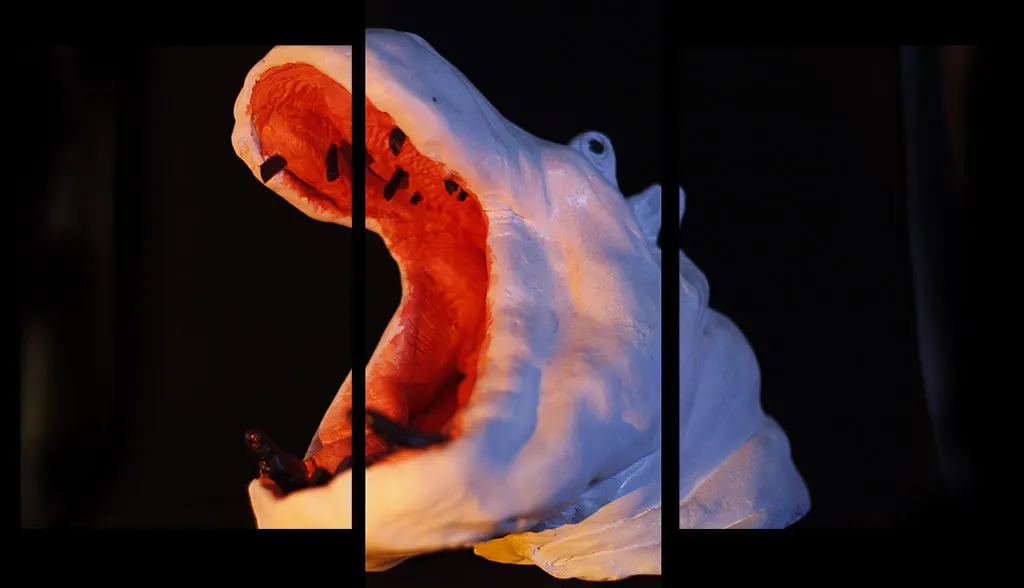
This hippopotamus head sculpture was born from artistic experimentation and from the desire to explore how color can completely transform the emotional perception of an animal traditionally associated with brute force and territorial aggression. More than a decorative object, the work represents a study of contradiction — a balance between realism and surrealism, violence and elegance, instinct and aesthetic control.
At first glance, the sculpture immediately creates visual tension.
The hippopotamus, normally perceived as one of the most intimidating and physically dominant animals in nature, is reinterpreted through an unexpected chromatic language that overturns the viewer’s expectations. The open mouth, usually associated with threat and raw animal power, becomes the focal point of a refined and almost delicate color composition. Softer tones emerge where one would instinctively expect darkness, aggression, or realism.
This deliberate contrast lies at the very center of the artwork.
The sculpture attempts to create a dialogue between two opposite emotional reactions: intimidation and fascination. The enormous jaw, the imposing anatomy, and the exposed teeth preserve the sensation of latent power characteristic of the animal itself. Yet the coloration introduces elegance, softness, and visual refinement, transforming the creature into something simultaneously powerful and strangely sophisticated.
The result is intentionally unsettling in a subtle way.
The observer recognizes the danger traditionally associated with the hippopotamus, but the aesthetic treatment prevents the work from becoming merely aggressive or brutal. Instead, the sculpture occupies an ambiguous emotional territory where animalistic force coexists with contemporary artistic sensitivity.
This duality becomes even more apparent when the work is inserted into minimalist or modern interiors. Within clean architectural spaces dominated by neutral palettes, essential furniture, and controlled lighting, the sculpture introduces tension without visual chaos. Its presence is strong, but deliberate. Dramatic, yet balanced.
Minimalist environments often rely on a few carefully selected focal points capable of defining the atmosphere of the entire room. This sculpture was conceived precisely with that idea in mind: not as an accessory, but as a central visual interruption capable of transforming the emotional rhythm of the surrounding space.
The contrast between the organic violence of the subject and the refined chromatic treatment allows the work to interact naturally with contemporary interior design aesthetics. Rather than appearing excessive, the sculpture becomes sculptural architecture — a presence that introduces character while maintaining formal elegance.
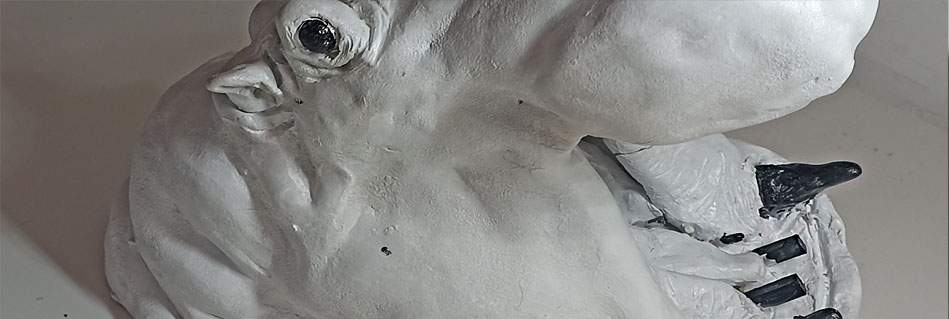
One of the most important aspects of the creative process involved the detailed study of the skin textures and anatomical surfaces. Many of these details are not immediately visible in photographs, particularly because the strong coloration naturally attracts the viewer’s attention first. However, the sculptural work dedicated to the skin was fundamental in preserving realism beneath the more surreal visual language created by the colors.
Wrinkles, folds, tension lines, pores, and subtle surface irregularities were modeled carefully to recreate the tactile sensation of real animal skin. This hidden realism serves an essential purpose: it grounds the sculpture physically and prevents the surreal coloration from disconnecting the work entirely from natural anatomy.
Without these details, the sculpture would risk becoming purely decorative or illustrative. Instead, the realistic texture work preserves the physical credibility of the animal beneath the artistic reinterpretation.
This balance between realism and stylization becomes one of the defining strengths of the piece.
The viewer first notices the unusual coloration.
Then, slowly, the anatomical realism begins to emerge.
This layered perception encourages longer observation and creates a more immersive visual experience. The sculpture reveals itself progressively rather than immediately, rewarding attention to detail.
Lighting also plays an important role in the perception of the work. Under stronger directional light, the surface textures become much more visible, emphasizing the craftsmanship involved in modeling the skin and anatomical structures. Softer lighting conditions, on the other hand, enhance the chromatic contrasts and the emotional atmosphere created by the sculpture.
As with many BartArt works, the piece changes personality depending on the environment surrounding it.
In bright modern spaces, the sculpture feels elegant and contemporary.
In darker interiors, it becomes more dramatic and psychologically intense.
The work was also conceived with customization in mind. One of the most distinctive aspects of the project is the possibility of previewing different color variations before the final realization of the sculpture. Through digital simulations and visual experimentation, clients can evaluate how different chromatic combinations interact with their intended exhibition space.
This process transforms the artwork into a collaborative design experience rather than a fixed object.
Different color palettes can radically alter the emotional identity of the sculpture. More neutral tones may emphasize realism and sculptural presence, while stronger or more experimental colors push the work further toward surreal contemporary art.
The simulation images developed during the creative process demonstrate exactly this possibility. They reveal how the same sculptural structure can generate entirely different atmospheres depending on the chosen color treatment. This flexibility allows the sculpture to adapt naturally to luxury interiors, creative spaces, minimalist environments, themed venues, lounges, modern villas, or exhibition settings seeking strong visual identity.
The ability to previsualize the final result inside a real environment also becomes particularly valuable for collectors and interior designers. By providing photographs of the intended space, it becomes possible to evaluate proportions, visual impact, and chromatic integration before the sculpture itself is finalized.
This approach reinforces one of the core principles behind BartArt creations: the idea that the relationship between artwork and environment should be developed intentionally rather than accidentally.
Ultimately, this hippopotamus sculpture is not simply about representing an animal.
It is about transforming instinct into design.
About allowing realism and surrealism to coexist inside the same object.
About discovering elegance where one would normally expect only force.
And perhaps most importantly, it is about proving that even the most aggressive forms in nature can become refined visual presences when filtered through experimentation, craftsmanship, and artistic imagination.
- Work Name: Vorago (The Breath of the Scream)
- Width: 15 cm
- Height: 26 cm
- Depth: 22 cm
- Weight: >3 Kg
- Date: December 2024